
Table of Contents
Key Takeaway
✔ Dry van trailers remain the most widely used option in 2025 due to their versatility and ability to protect freight from weather and theft.
✔ The trucking industry is projected to grow steadily in 2025, driven by e-commerce demand, infrastructure investments, and digital freight brokerage.
✔ Diesel continues to be the dominant fuel for commercial trucks, though electric and alternative options are gaining momentum.
✔ RGN, flatbed, and reefer trailers are among the essential trailer types shaping the future of modern freight transport.
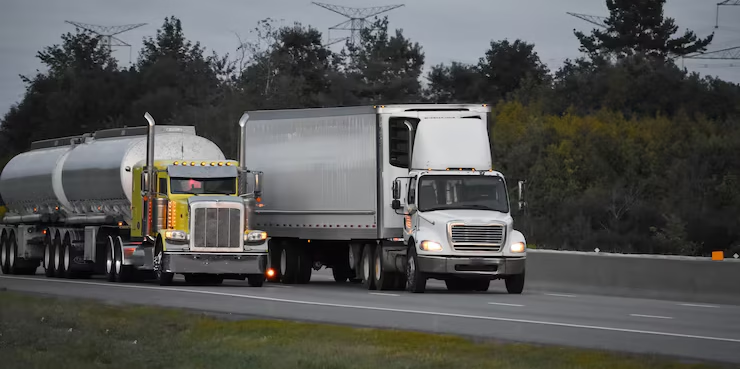
Trailer trucks play a major role in keeping goods flowing from one place to another. Understanding the different types of trailers helps businesses, drivers, and anyone interested in logistics see how transportation works. Each trailer type is designed for a specific purpose, helping carriers move various kinds of freight safely and efficiently.
8 Essential Trailer Truck Types for Trucking in 2025
1. Dry Van Trailers
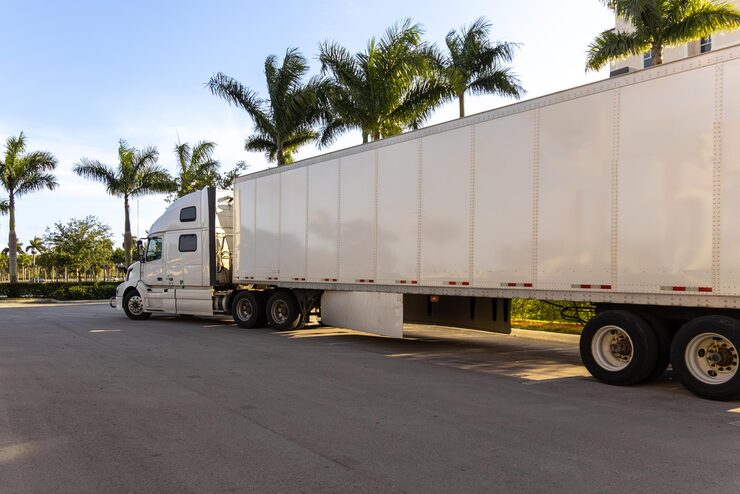
Dry van trailers are the most common trailers on the road. They are fully enclosed and protect freight from weather, theft, and outside damage. Most retail goods, electronics, and packaged foods are moved using this type of trailer truck.
- Purpose: Designed for general freight that needs protection.
- Key Features: Enclosed rectangular box, rear doors for loading, and no temperature control.
- Usage: Ideal for dry goods, boxed products, and items that don’t require refrigeration.
2. Flatbed Trailers
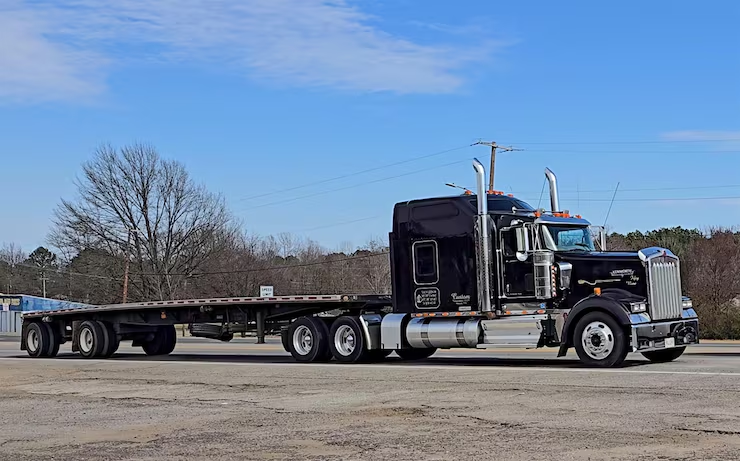
Flatbed trailers are open and versatile, allowing haulers to move large or irregularly shaped items that wouldn’t fit inside a dry van. This type of trailer truck is known for flexibility and is commonly seen on highways carrying industrial materials.
- Purpose: Best for hauling heavy or oversized loads.
- Key Features: No roof or sides, allowing cargo to be loaded from any direction.
- Usage: Often used to transport lumber, pipes, machinery, and construction materials.
3. Refrigerated (Reefer) Trailers
Refrigerated trailers, often called reefers, come with temperature control systems. They are used for transporting goods that must stay cold or frozen.
- Purpose: Keeps perishable items fresh during long hauls.
- Key Features: Built-in cooling unit, insulated walls, and precise temperature settings.
- Usage: Used for moving frozen foods, dairy products, meat, produce, and medical supplies.
4. Step-Deck Trailers
Step-deck trailers, also known as drop-deck trailers, have two deck levels that make them useful for carrying taller cargo.
- Purpose: Allows taller loads that exceed standard height limits for flatbeds.
- Key Features: Upper and lower decks, easy loading, safer for tall equipment.
- Usage: Used for large machinery, vehicles, and tall construction equipment.
5. Lowboy Trailers
Lowboy trailers have extremely low decks, making them perfect for hauling heavy or oversized equipment that can’t fit on other trailers.
- Purpose: Transports extra-large machinery and tall equipment.
- Key Features: Two-level design with a very low center deck.
- Usage: Common for moving bulldozers, cranes, and industrial parts.
6. Conestoga Trailers
Conestoga trailers combine the convenience of a flatbed with the protection of a covered trailer. They use a sliding tarp system that can open or close easily.
- Purpose: Provides weather protection while keeping loading flexible.
- Key Features: Retractable tarp system, steel frame, and easy cargo access.
- Usage: Used for palletized cargo, machinery, and materials that need cover but not full enclosure.
7. Removable Gooseneck (RGN) Trailers
RGN trailers have a detachable front section, which allows heavy equipment to be driven directly onto the trailer.
- Purpose: Simplifies the loading of large, self-powered equipment.
- Key Features: Removable neck, low deck, and built-in ramp for loading.
- Usage: Used for transporting heavy machinery like tractors, excavators, or industrial vehicles.
RGN trailers are essential in construction and energy freight, often chosen in freight brokerage for complex, secure logistics. Their use supports American economic and energy goals by delivering reliable, affordable, and efficient transport for heavy energy materials.
Each trailer truck with an RGN helps move oversized loads safely while promoting cleaner, more efficient energy across the country.
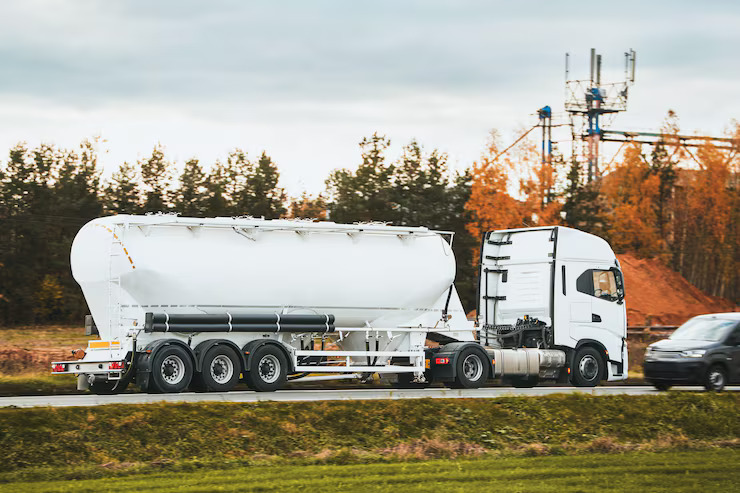
8. Tanker Trailers
Tanker trailers carry bulk liquids or gases. They are designed to transport materials that can’t be packed in boxes or crates.
- Purpose: Transports liquids such as fuel, milk, or chemicals.
- Key Features: Cylindrical body, strong seals, and safety valves.
- Usage: Used for hauling petroleum, water, and food-grade liquids.
What Type of Trailer Truck Is Most Commonly Used?
The most common trailer in 2025 is still the dry van trailer. It remains the go-to for general freight because it can haul almost anything that fits inside. In freight brokerage, dry vans dominate booking requests due to their versatility. They work well for retail shipments, e-commerce orders, and non-perishable goods.
Among all types of trailers, the dry van continues to be the backbone of logistics. Nearly every trailer truck fleet includes several dry vans, keeping supply chains efficient and reliable.
What Are the Trucking Industry Forecasts for 2025?
The global freight trucking market was valued at USD 2,739.24 billion in 2024 and is expected to grow to USD 2,837.85 billion in 2025, reaching USD 3,698.58 billion by 2032. This growth reflects a compound annual growth rate (CAGR) of 3.9% from 2025 to 2032. North America held the largest share of the market at 37.22% in 2024, showing its dominance in global transportation and logistics.
What Type of Fuel Is Most Commonly Used in Commercial Trucks?
Most commercial trucks still run on diesel fuel in 2025. Diesel engines provide the torque needed for heavy loads and long distances.
- Common Fuel: Diesel remains the standard choice due to reliability and efficiency.
- Alternatives: Natural gas, biodiesel, and electric power are gaining popularity.
- Industry Shift: Companies are testing cleaner options to meet environmental goals
In freight brokerage, fuel type affects shipping rates and pricing. Diesel is still the mainstay, but more carriers are testing electric trailer truck models. Regardless of the types of trailers being used, understanding fuel efficiency is key to managing costs.
How Long Is a Semi Trailer?
When asking how long is a semi trailer, the answer depends on the type of freight being hauled and the trailer’s design. In the United States, the standard semi trailer length is typically 53 feet, but some trailers are shorter or longer based on use and state regulations.
- Standard Length: Most dry van and refrigerated trailers measure around 53 feet, offering a balance of space and maneuverability.
- Short Trailers: Smaller trailer trucks hauling local or specialized freight often use 28- to 48-foot trailers for easier city navigation.
- Extended Lengths: Certain flatbeds, lowboys, or RGN trailers can stretch up to 60 feet or more when hauling oversized or heavy equipment.
Understanding how long a semi trailer is helps carriers and freight brokers plan routes, manage load weight, and ensure compliance with transport regulations.
Frequently Asked Questions
How does freight brokerage help trucking companies?
Freight brokerage links shippers with carriers for efficient transport. Brokers manage scheduling, pricing, and communication, easing the workload for trailer truck operators. This keeps fleets of all sizes running smoothly.
Why are trailer maintenance checks important?
Regular maintenance prevents breakdowns and ensures safety. Checking brakes, tires, and connections keeps every trailer truck road-ready and extends the life of different types of trailers.
What affects shipping costs in trucking?
Shipping costs depend on fuel prices, distance, trailer type, and weight. The types of trailers used and freight brokerage rates also impact pricing based on market demand.
How do weather conditions impact trucking?
Severe weather can delay trips, change routes, and cause maintenance issues. Using the right types of trailers and reliable freight brokerage tools helps minimize disruptions.
How long does it take to load a trailer?
Loading time varies by cargo and equipment. Flatbeds and RGNs take longer due to manual securing, while dry vans and reefers load faster with dock tools.
Boost Freight Operations With Expert 3PL Logistics by Best in New York, NY!
Businesses across New York, NY rely on 3PL Logistics by Best to handle every stage of transportation—from warehousing and distribution to full-service freight management. With advanced tracking, reliable carrier partnerships, and efficient handling, freight moves smoothly and on time. Whether shipping across the city or nationwide, New York, NY operations gain a trusted logistics partner focused on results and reliability.
Contact 3PL Logistics by Best today to get a customized logistics solution in New York, NY.