

How to transition to a new 3PL comes down to six moves: define requirements, build a timeline-based project plan, communicate tightly, validate tech, transfer inventory in stages, and monitor performance after launch.
If you’re evaluating 3PL warehousing services, a smooth switch requires meticulous planning, clear communication, and phased execution so orders keep moving while the new operation stabilizes.
Table of Contents
Must-Know Points
- Define clear requirements (volume, SLAs, packaging, inventory controls) so 3PL logistics providers can execute consistently from day one.
- Manage the switch like a project with owners, milestones, and timelines to keep 3PL logistics on track.
- Keep tight communication with both the old and new 3PL to avoid cutover gaps, returns issues, and customer-impact surprises.
- Test 3PL logistics software integrations early with end-to-end test orders to prevent data and shipping failures at go-live.
- Transfer inventory in stages (slow movers first) and soft launch with close monitoring to stabilize 3PL warehousing services quickly.

1. Define Your Requirements Clearly (Before You Sign Anything)
Clear requirements keep expectations aligned and reduce surprises. This is a core part of 3PL best practices because it gives both sides a shared definition of success.
Include:
- Volume ranges: Typical daily orders and peak periods.
- Service levels: Receiving speed, order cutoffs, shipping turnaround.
- Packaging rules: Standard packing, inserts, kitting, special handling.
- Inventory controls: Barcode standards, cycle counts, lot tracking if needed.
- Exceptions: Backorders, split shipments, channel-specific rules.
When requirements are written clearly, 3PL logistics providers can scope accurately, and 3PL logistics software setup is faster because SKU rules and service-level logic are defined upfront.
2. Build a Detailed Transition Plan With Timelines + Owners
Switching 3PL logistics providers is an operations project. A transition plan keeps tasks, dates, and responsibilities visible so the switch does not rely on memory.
Your plan should include:
- Phases: Setup, integration, staged inventory transfer, go-live, stabilization.
- Owners: One internal lead per function (ops, systems, finance, support).
- Milestones: Data readiness, integrations tested, first inbound received, soft launch, full launch.
- Cadence: Regular check-ins with both providers until stable.
Treat it as a living document. Update dates and owners immediately when something changes.

3. Keep Communication Open With BOTH Your Old and New 3PL
One of the easiest ways to create disruption is to stop coordinating with the outgoing provider too early. Your old 3PL often has context that affects continuity: returns in transit, inventory adjustments, packing history, and carrier routines.
Confirm in writing:
- Cutover dates: Final ship date and final receiving date at the old site.
- Inventory snapshot: Timing and what counts as “available.”
- Returns routing: Where returns go during the transition window.
- Claims/damages: How exceptions are handled during transfer.
- Escalations: Who owns late shipments and customer-impact issues.
This is an overlooked 3PL best practices step because it feels administrative, but it directly protects fulfillment performance.
4. Ensure 3PL Logistics Software Integrations Are Tested Early
Many transition problems start in systems, not in the warehouse. 3PL logistics software connects orders, inventory, shipping methods, and tracking between your storefront or ERP and the warehouse.
Test before go-live:
- SKU mapping: Barcodes, units, bundles, case packs.
- Order rules: Imports, holds, backorder behavior.
- Shipping logic: Carrier services and method mapping.
- Tracking: Tracking updates flowing back to your systems and customers.
- Inventory sync: Adjustments, audit trails, committed vs. available logic.
Run end-to-end test orders through the 3PL logistics software connection to confirm the full workflow works as expected. This is a practical 3PL best practices checkpoint.
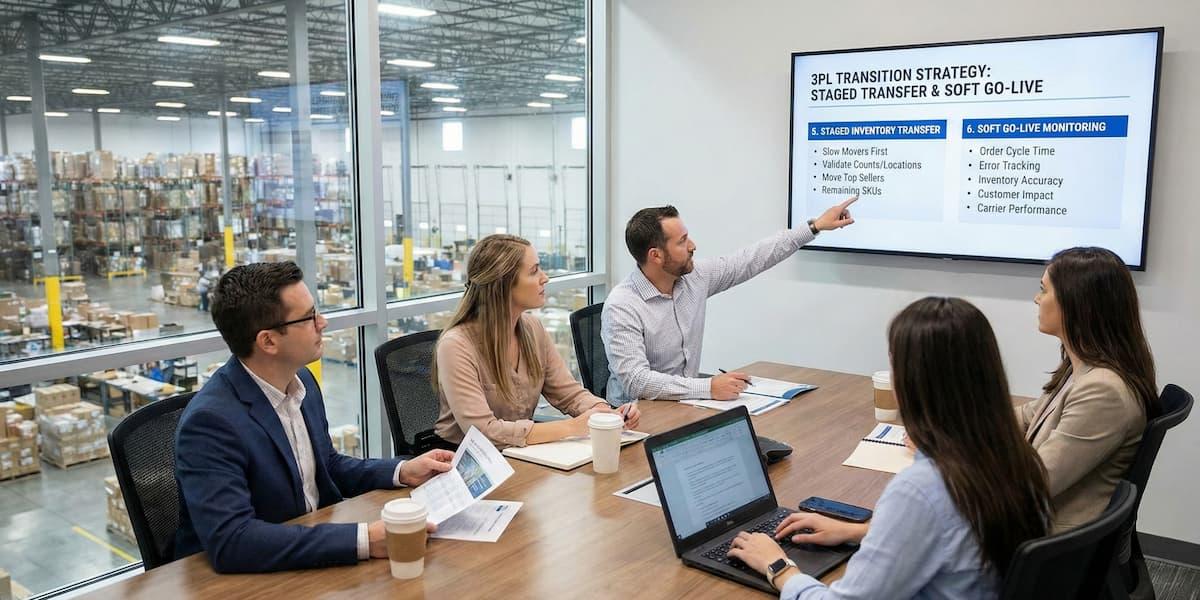
5. Transfer Inventory in Stages (Start With Slow Movers First)
A staged transfer reduces risk because you validate receiving and putaway before moving high-velocity inventory. This approach is widely used in 3PL logistics transitions.
A simple staged approach:
- Stage 1: Move slow movers first to confirm receiving accuracy.
- Stage 2: Validate counts, scans, bin locations, replenishment rules.
- Stage 3: Move top sellers with tighter reconciliation.
- Stage 4: Move the remaining long-tail SKUs once stable.
Common pitfalls:
- SKU naming mismatches across systems.
- Missing or unreadable barcodes.
- Partial cases that create count errors.
- Damages discovered late in the process.
For NYC businesses, staged transfers can also help manage appointment scheduling and inbound timing variability.
6. Launch in a Controlled “Soft Go-Live” and Monitor Closely
A soft launch limits exposure while you confirm real-world performance. You can route one channel first or throttle a percentage of orders for a few days.
Monitor daily for 1 to 2 weeks:
- Order cycle time: From order import to carrier scan.
- Errors: Mis-picks, address issues, packaging misses.
- Inventory accuracy: Adjustments by SKU and root cause.
- Customer impact: Ticket volume and delivery issues.
- Carrier performance: Missed pickups, late scans, service downgrades.
This is where 3PL logistics providers demonstrate whether service levels hold under real volume, and where you finalize steady-state dashboards in 3PL logistics software
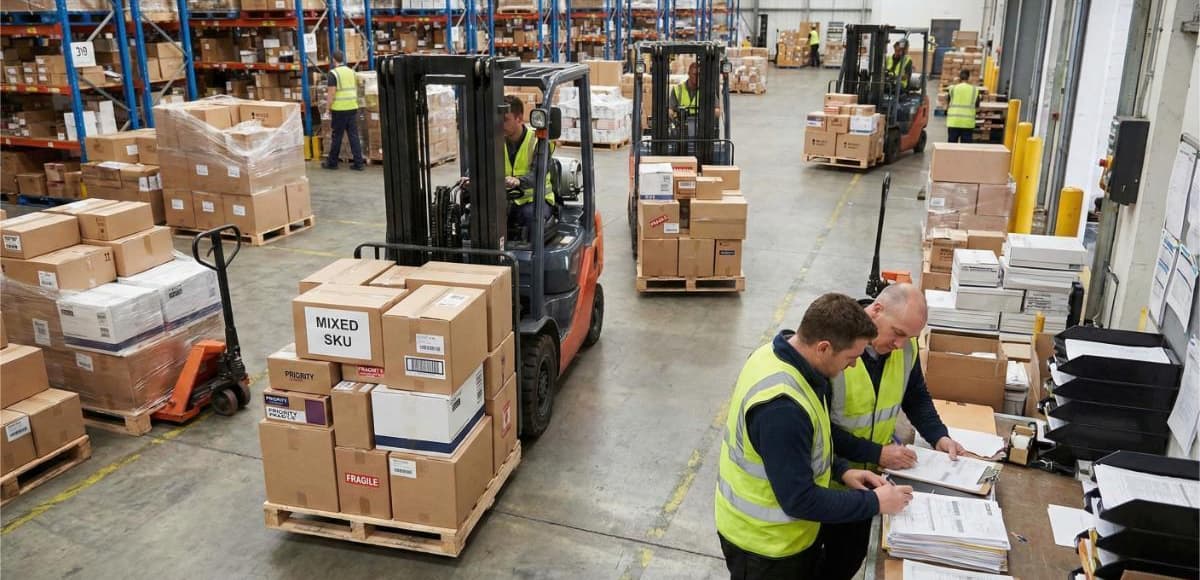
Common Mistakes to Avoid When Switching 3PL Warehousing Services
Avoiding these mistakes reduces the chance of service gaps and protects the customer experience during a 3PL logistics transition.
- Skipping a written plan and relying on informal updates.
- Moving all inventory at once instead of staging by velocity.
- Going live without end-to-end test orders in 3PL logistics software.
- Failing to coordinate returns routing and exception handling.
- Choosing a provider based on rate card alone, not execution quality.
- Treating the old 3PL as “done” before final shipments and claims settle.
Frequently Asked Questions (FAQs)
How to raise expectations and get more from your 3PL?
Set clear SLAs and KPIs upfront (accuracy, on-time shipping, receiving time, inventory accuracy), document SOPs, require regular reporting, and hold monthly performance reviews with action items.
What is a 3PL strategy?
A 3PL strategy is your plan for how third-party fulfillment supports business goals, including service levels, warehouse locations, tech integrations, cost structure, and how you’ll measure performance.
Why have 3PLs become more important in recent years?
Faster delivery expectations, ecommerce growth, rising labor/warehouse costs, and multi-channel selling have made reliable 3PL logistics providers essential for scaling without building in-house operations.
What are some common 3PL challenges?
Inventory inaccuracies, shipping delays, inconsistent picking/packing, limited visibility in 3PL logistics software, unexpected fees, slow receiving, and communication gaps during peak periods.
How to manage 3PL performance?
Track KPIs weekly, audit invoices, monitor inventory adjustments, run regular scorecards, escalate recurring issues quickly, and align on continuous improvement goals tied to your 3PL best practices.
Need Reliable 3PL Warehousing Services in NYC?
If your team is evaluating 3PL companies nearby in NYC and wants a structured approach to onboarding in the NYC market, 3PL Logistics By Best can be a fit to explore. Focus your conversations on execution details: transition timelines, integration testing support for 3PL logistics software, staged inventory transfer, and post-launch monitoring so your business can switch providers with fewer surprises.
Schedule a consultation today.