
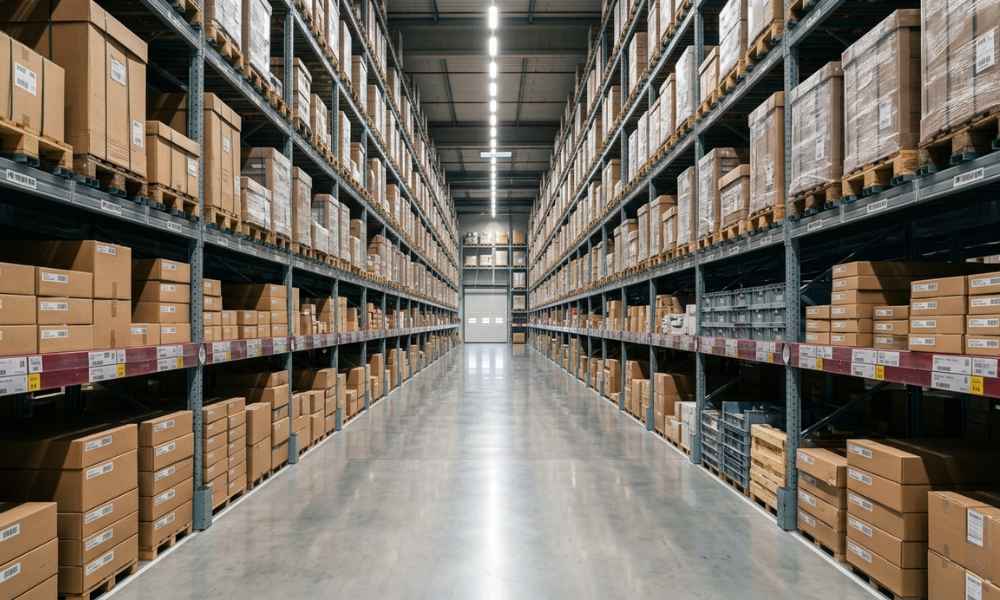
Quick Facts3PL warehousing speeds up delivery by positioning inventory closer to customers. Automation and WMS technology improve fulfillment accuracy and efficiency. Outsourcing logistics turns fixed costs into scalable expenses. Data-driven forecasting reduces stockouts and excess inventory. A 3PL partnership lets businesses focus on growth instead of operations. |
What's In This Guide
Shipping expectations are higher than ever, and operational pressures continue to increase. Businesses must balance speed, accuracy, and cost control within increasingly complex supply chains.
Distribution has become a critical part of overall efficiency and service performance.
3PL warehousing supports faster, smarter distribution by outsourcing logistics to specialized providers that leverage advanced technology, strategic locations, and scalable infrastructure. This allows businesses to shorten shipping times, improve accuracy, and manage costs without operating their own warehouse facilities.
Speed and efficiency are essential. Here are the key ways 3PL warehousing makes it possible.
What Is 3PL Warehousing?
3PL, or third-party logistics, refers to outsourcing warehousing and fulfillment operations to a specialized provider. Instead of managing their own facility, staff, and systems, businesses rely on a 3PL to handle inventory storage, order picking and packing, shipping coordination, inventory management, and returns. Many 3PL providers also offer services such as kitting, labeling, freight coordination, and compliance support.
Who Uses 3PL Services?
3PL warehousing supports:
- E-commerce brands
- Retail distributors
- B2B suppliers
- Importers and exporters
- Businesses expanding into new regions
How 3PL Warehousing Supports Faster Distribution
Speed is one of the most visible benefits of third-party logistics, but faster shipping starts with smart inventory placement and efficient warehouse operations. A strong 3PL network reduces delays from inbound freight to final delivery.
Strategic Geographic Locations Reduce Transit Times
3PL providers operate warehouses near ports, airports, highways, and rail hubs. Storing inventory close to these transportation corridors shortens transit distances and speeds up delivery. In major markets like New York, NY, proximity to infrastructure helps streamline both inbound shipments and last-mile distribution.
Distributed Inventory Enables 1 to 2 Day Shipping
Many 3PL networks spread inventory across regional facilities instead of relying on one central warehouse. This approach places products closer to customers, lowering shipping zones and reducing transit times. As a result, two-day shipping becomes more achievable and cost-effective.
Faster Order Processing Inside Modern Warehouses
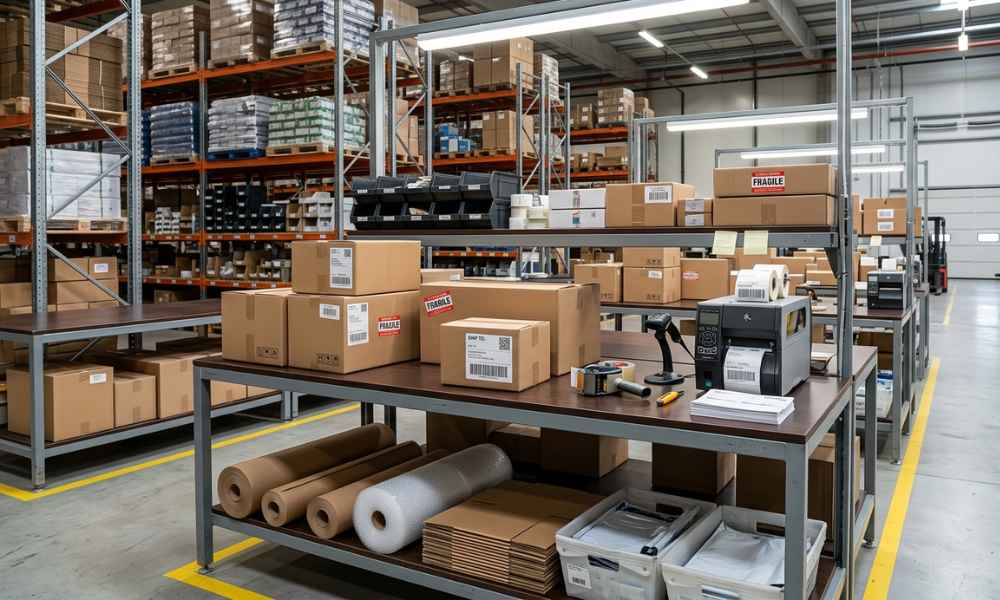
Modern 3PL facilities use tools like barcode scanning, pick-to-light systems, and automation to accelerate fulfillment. Combined with trained logistics teams, these systems support accurate, same-day or next-day shipping while minimizing errors.
Direct-to-Store and Direct-to-Customer Fulfillment
3PL warehousing can ship products directly to retail stores or customers, reducing unnecessary handling. Fewer touchpoints shorten delivery timelines, lower damage risk, and improve replenishment efficiency for retailers and manufacturers.
How 3PL Warehousing Supports Smarter Operations
Beyond speed, 3PL warehousing improves distribution through data-driven systems, advanced technology, and streamlined processes. Smarter operations mean better visibility, higher accuracy, and stronger inventory control across the supply chain.
Advanced Warehouse Management Systems (WMS)
Most 3PL providers rely on advanced warehouse management systems that deliver real-time visibility into inventory levels, SKU locations, and order status. These platforms use barcode verification and automated validation to improve accuracy and support consistently high fulfillment performance.
In addition, modern WMS solutions incorporate data analytics, automation, and optimization algorithms to improve storage utilization, streamline picking paths, and reduce operational inefficiencies throughout the warehouse.
Data Analytics and Demand Forecasting
3PL providers use historical sales data and predictive analytics to forecast demand and adjust inventory levels. By identifying seasonal patterns and sales trends, businesses can avoid stockouts and reduce excess inventory. This leads to better cash flow management and more strategic replenishment planning.
Omnichannel Integration
Modern 3PL warehouses integrate seamlessly with e-commerce platforms, online marketplaces, wholesale systems, and retail channels. As online and omnichannel retail continue to expand, the need for efficient, technology-driven warehouse operations has increased, accelerating the adoption of advanced warehouse management systems.
Real-time synchronization across all sales channels keeps inventory counts accurate, prevents overselling, and reduces fulfillment errors. This connected system streamlines operations for businesses managing multiple sales channels.
Efficient Reverse Logistics
Returns management is a critical part of smart distribution. 3PL providers inspect, sort, and restock eligible items quickly, reducing the time products sit idle. Efficient reverse logistics helps recover revenue, maintain accurate inventory counts, and improve overall operational performance.
How to Determine If Your Business Needs a 3PL
Outsourcing logistics is a strategic decision. Evaluating your current operations can clarify whether a 3PL partnership is the right move.
Step 1: Assess Order Volume and Growth
If order volume is increasing and internal fulfillment is struggling to keep pace, scalability may be limited. Frequent delays or backlogs indicate capacity constraints.
Step 2: Analyze Shipping Times and Costs
Review delivery performance metrics. Are customers receiving orders within competitive timeframes? Evaluate shipping costs as a percentage of revenue. Rising transportation expenses may signal inefficiencies.
Step 3: Examine Fixed Overhead
Calculate total warehouse-related costs, including rent, utilities, labor, equipment, and software.
Compare these fixed expenses to a variable 3PL pricing model.
Step 4: Review Inventory Accuracy
High error rates, frequent stock discrepancies, and excessive returns due to fulfillment mistakes reduce profitability. Advanced warehouse management systems often improve accuracy significantly.
Step 5: Consider Expansion Plans
If you plan to enter new geographic markets, partnering with a 3PL that already operates in those regions can accelerate expansion without building new facilities.
Frequently Asked Questions
What is the difference between a 3PL and a fulfillment center?
A fulfillment center typically focuses on picking, packing, and shipping orders. A 3PL provider offers broader logistics services, including inventory management, freight coordination, compliance handling, and returns processing.
Can small businesses benefit from 3PL warehousing?
Yes. Small and mid-sized businesses often benefit from scalable infrastructure, negotiated shipping rates, and advanced warehouse technology that would be costly to build independently.
Will I lose control of my inventory if I use a 3PL?
No. Modern 3PL providers use advanced warehouse management systems that offer real-time inventory visibility, reporting dashboards, and performance metrics. Businesses maintain oversight of stock levels, order status, and shipping activity while the 3PL manages day-to-day operations.
Is outsourcing warehousing more cost-effective than in-house operations?
It depends on order volume and growth trajectory. For many businesses, converting fixed warehouse costs into variable expenses improves cash flow and reduces financial risk.
How long does it take to transition to a 3PL provider?
Onboarding timelines vary based on inventory size and system integration complexity. Many transitions occur within several weeks once inventory transfer and software integrations are complete.
Strengthen Your Distribution Strategy With Experienced 3PL Support
Faster shipping, smarter inventory control, scalable infrastructure, and reduced risk all drive stronger distribution performance. Third-party logistics warehousing allows businesses to focus on growth instead of managing complex logistics operations.
For companies operating in or expanding through New York, partnering with an experienced provider such as 3PL Logistics By Best can help align your distribution strategy with long-term goals.
Partner with 3PL Logistics By Best today!